












TrendHR is a Dallas, Texas based human resource outsourcing company that provides PEO services to businesses nationwide. TrendHR allows businesses to focus on their core competencies and grow their business, by minimizing the burden of employment administration.
Founded in 1997, TrendHR was built based on the traditional staffing company model specializing in temporary and direct hire placement. Our commitment to superb customer service quickly allowed us to become one of the largest staffing companies in the North Texas Corridor. In 2001, that commitment enabled TrendHR to go beyond traditional staffing services and begin offering clients human resources options, including PEO services.
TrendHR's PEO program operates as an off-site human resources department for its clients. TrendHR provides human resource functions, such as administering employee benefits, insurance, payroll, taxes, and numerous other employee related services. All these services are provided through economies of scale at tremendous cost savings compared to the expense of self-administering such programs.
Now in our 22nd year of business, TrendHR continues to grow and be recognized for our commitment to outstanding-personalized customer service. TrendHR has been awarded seven times by Inc. 5000 as one of the fastest growing private companies in the U.S., and two of those years TrendHR has been within the top 100 human resource companies nationwide.
We offer a complete suite of Human Resource Outsourcing services, including consulting, payroll, benefits, workers compensation insurance, safety inspections, training programs, and more. To learn about how we can help relieve you of the burden of these costly activities, call us at 1-855-TrendHR


2007, 2008, 2009, 2010, 2011, 2014, 2019 and 2020
Fastest-Growing Private Companies in America
The first time TrendHR made the Inc list was in 2007. TrendHR was ranked number #1,646 in Inc.com's list of the fastest-growing companies in the US.
In 2008, TrendHR climbed even higher in the rankings, coming in at number #824 in Inc.com's list of the fastest-growing companies in the US.
In 2009, TrendHR was ranked #1,977 in Inc.com's list of the fastest-growing companies in the US.
In 2010, TrendHR was ranked #4,088 in Inc.com's list of the fastest-growing companies in the US.
In 2011 TrendHR made it on the Inc. 5000 list for FIVE years straight! TrendHR was ranked #4,992 in Inc.com's list of the fastest-growing companies in the US.
The 6th time TrendHR ranked on the Inc. 5000 list was in 2014. TrendHR was ranked #1,788 of America's Fastest-Growing Private Companies.
In 2019, TrendHR made the list for the 7th time, ranking #2112 on Inc.5000 annual list of Fastest-Growing Companies in America
In 2020, TrendHR has once again made the list for the 8th time, ranking #655 on Inc.5000 annual list of Fastest-Growing Companies in America
2007, 2014, and 2019
Not only was TrendHR found to be one of the fastest growing companies in America by Inc. 5000, but also was identified at the top of the Human Resource industry nationwide.

2018, 2019, 2020 and 2021
“Certified July 2021 to July 2022” – Great Place to Work Institute

2016
TrendHR has been selected for the 2016 Best of Rockwall Award in Employment Agency category by the Rockwall Award Program.
2009, 2011 and 2019
TrendHR has been recognized as one of the 100 fastest-growing privately held companies in the Dallas area. SMU's Cox Business School ranked TrendHR in 2009 at #37, and 2011 at #14 and #71!

1999, 2000, 2001, 2002, 2003, 2004, 2005, 2006, 2007, 2008 and 2009
For 11 years in a row the Dallas Business Journal awarded TrendHR as one of the Largest Dallas Staffing Companies.

2009
Best of Local Business for Temporary Help Employment Contractors
The US Commerce Association awarded TrendHR Services the 2009 Dallas Award.

2009, 2010 and 2011
Best Place to Work in Rockwall County - Rockwall Herald Banner
TrendHR has been voted Best Place to Work in Rockwall County by the readers of the Rockwall County Herald Banner.

2017
Boardroom Elite “Best Human Resource Services Provider - Texas”

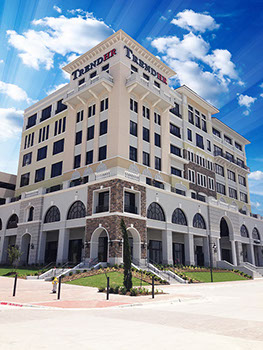
TrendHR was founded in 1997 with the mission to provide a cost-effective alternative to the traditional employer-employee relationship. Armed with that mission, TrendHR has assembled what we consider to be the most effective management tool available on the market today for controlling escalating employee costs. TrendHR's program not only affords its clients the opportunity to tap into our human resource expertise, but also allows clients to benefit from dramatic cost savings due to tremendous economies of scale.
TrendHR understands that companies are unique and therefore we customize our services for each client in an endeavor to enable our client company to be more competitive in their respective industries. TrendHR understands the importance of a satisfied client and its employees. Our commitment to service at a low price keeps us competitive. TrendHR has an excellent reputation that is proven repeatedly with our clients.
PEO stands for Professional Employer Organization.
A PEO is a co-employment relationship where TrendHR is the Employer of Record and assumes responsibility for the administrative aspects of your staff’s employment relationship. You continue to maintain management control over your staff.
A Professional Employer Organization (PEO) is a third-party company that partners with businesses to manage various HR-related tasks, such as payroll, benefits administration, and compliance with employment laws and regulations. By partnering with a PEO like TrendHR, your company can streamline HR processes, reduce administrative burdens, and access a wide range of HR services and expertise.
Having a relationship with a PEO such as TrendHR can release you from complex Human Resource tasks so that you have more time to concentrate on increasing your bottom line. In this increasingly competitive environment, it is vital for your business to concentrate on the operation and revenue-producing side of your operations. To be able to focus on your core competencies, you can contract with a PEO company like TrendHR to assume some complex employee related issues.
Becoming a client of TrendHR means executing an agreement to share employer responsibilities between us as the PEO or HRO (see below) and you, our client. This employment relationship is known as co-employment and is the business model through which TrendHR delivers our suite of services.
As worksite employers, you continue to direct the day-to-day duties and activities of your employees. As a co-employer responsible for many human resource administrative functions, TrendHR delivers and manages employee benefits administration, automated payroll processing, payroll tax preparation and filing, and is the "employer of record" on the W-2 forms. We also handle workers' compensation, EEOC claims, state unemployment insurance, and much more.
An HRO is a full-service human resource outsourcing service arrangement that normally includes not only PEO, but also additional human resources management services not normally associated with PEO's, such as employee handbook administration, HR consulting, job description assistance, and other functions.
TrendHR is a local DFW-based PEO that prides itself on providing stellar customer service and comprehensive HR solutions tailored to each client's unique needs. With a dedicated team of HR professionals, TrendHR offers a wide array of services, including:
TrendHR goes beyond traditional PEO services by offering complete Human Resources outsourcing. This means that your company can entrust all of its HR functions to TrendHR's expert team, from talent acquisition and employee relations to performance management and training and development.
TrendHR's payroll and tax administration services ensure that your employees are paid accurately and on time while keeping your business compliant with ever-changing tax laws and regulations.
TrendHR can help your company design and administer employee benefits packages that are both attractive to potential employees and cost-effective for your business.
Navigating the complex landscape of employment laws and regulations can be a daunting task. TrendHR's compliance and risk management services will help your company stay up-to-date and mitigate potential risks.
What truly sets TrendHR apart from other PEOs is its commitment to exceptional customer service. TrendHR ensures that you receive personalized attention and prompt support for all your HR needs.
Besides, how many places can you call and get a live person nowadays?
In addition to just producing your payroll, TrendHR, as the PEO or HRO, also takes on additional administrative responsibilities that a payroll-only service does not, such as administering benefits, workers’ compensation, workplace safety and training, and other human resource services.
In addition, unlike a payroll service, your employees can be covered under our medical, dental, supplemental, and workers’ compensation insurance. As a result, TrendHR can actually save you money over a payroll service by using our economies of scale to provide better rates than you could get alone.
Rates and fees are based on several factors, including the number of employees, gross payroll, and other parameters. Each customer is quoted on an individual basis. To request a quote now, click here.
We can offer you and your employees a host of “big-company” benefits underwritten by some the most recognized names in the industry. We can supply major medical, dental, and vision insurance, as well as supplemental medical. We can also provide your employees with a 401(k)-retirement plan. For more information on our benefits services and providers, click here.
We are headquartered near Dallas, Texas, but we can operate in and provide state reporting for all 50 states. We currently have clients all over the U.S., from California to New York.
Yes. We provide our clients with secure online access to run select reports, update employee information, enter payroll, and more. We can also, upon request, offer online restricted access to your employees so they can view select information.
As the workplace evolves, HR departments must adapt to stay ahead of the curve. In this rapidly changing environment TrendHR professionals are continuously seeking innovative ways to enhance employee experiences, streamline processes, and drive organizational success. The latest HR trends and practices are shaping the future of human resources and can help your company thrive in 2023 and beyond.
One prominent HR trend is the increased emphasis on employee well-being and mental health. The pandemic has highlighted the importance of supporting employees' mental and emotional well-being. HR departments must create supportive environments, including offering mental health resources, promoting work-life balance, and fostering a positive workplace culture.
As technology advances, the need for continuous learning and upskilling has become more critical than ever. HR professionals must ensure that employees have access to resources and opportunities to develop new skills and stay up-to-date with industry trends. Companies that invest in their employees' growth will be better equipped to navigate the changing workforce landscape.
Personalized employee experiences are a crucial HR trend for creating an engaging and productive work environment. HR departments must develop strategies to tailor employee experiences based on individual preferences, career aspirations, and learning styles. This approach can help improve employee satisfaction, retention, and performance.
Outsourcing your HR department to a Professional Employer Organization (PEO) is an effective way to reduce the burden of employee administration. By partnering with a PEO, companies can access a wide range of HR services and expertise, allowing internal HR teams to focus on strategic initiatives that drive organizational success.
In the ever-evolving world of human resources, staying current with HR trends is essential for success. By focusing on employee well-being, investing in continuous learning, delivering personalized employee experiences, and considering outsourcing HR to a PEO, HR departments can create a positive work environment that drives both employee and organizational success. Stay ahead of the curve by implementing these trending HR practices and prepare your company for the future of work. To request a quote now, click here.
Manufacturing
Healthcare
Non-Profit
Home Services


